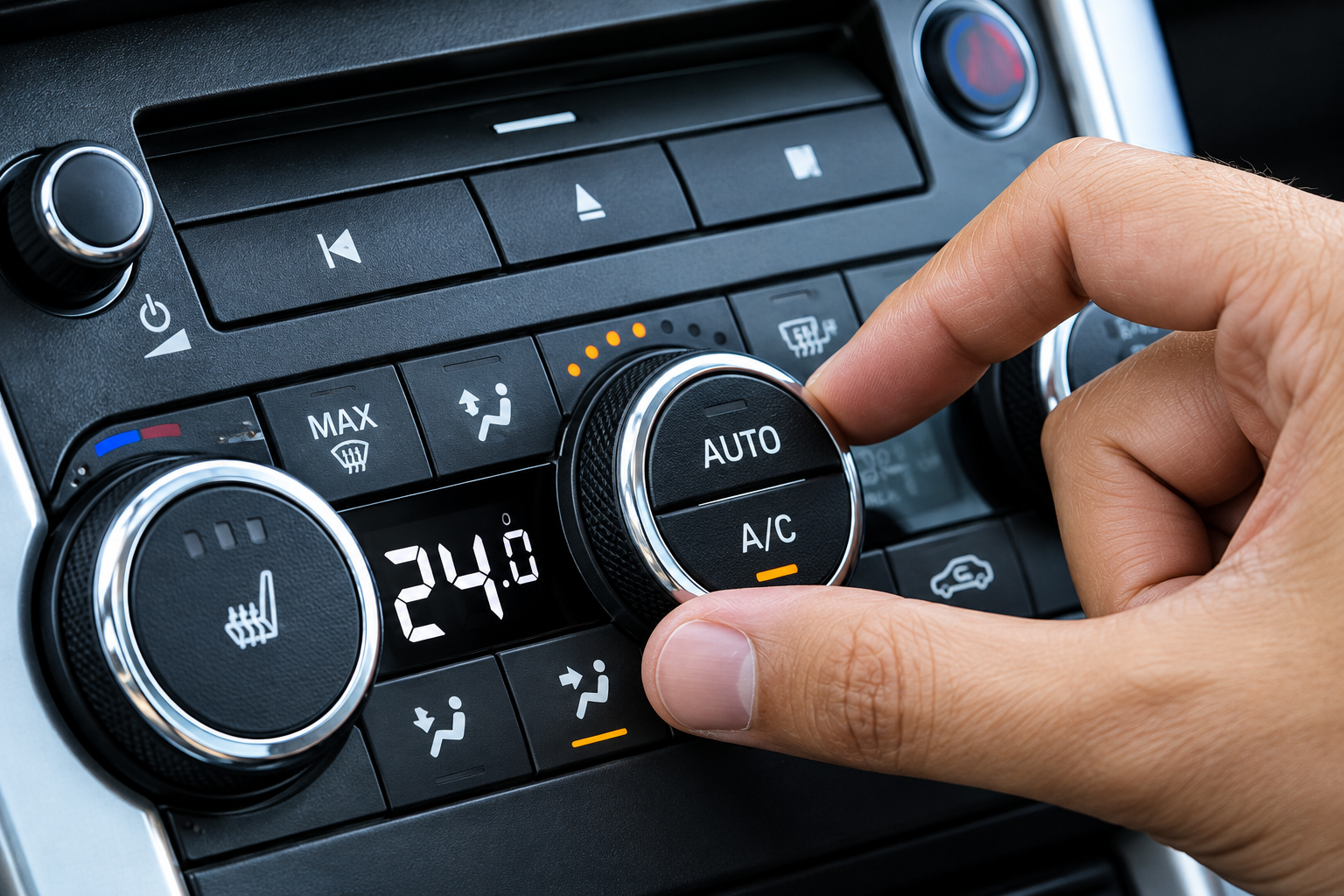
A vehicle’s air conditioning system relies on several connected components to keep the cabin cool and comfortable. Each component has a specific job, from circulating refrigerant to removing heat and directing cooled air into the passenger area. Understanding these components can help vehicle owners recognise common problems and make better decisions when replacement parts are required.
How a Vehicle Air Conditioning System Works
An automotive air conditioning system operates through a continuous refrigeration cycle. Refrigerant moves through different components, changing pressure and temperature as it travels around the system.
The compressor sends refrigerant towards the condenser, where heat is released. The refrigerant then passes through an expansion device before entering the evaporator. Inside the evaporator, heat from the cabin air is absorbed by the refrigerant. The blower then pushes the cooled air through the vehicle’s vents.
This process depends on several components working correctly. A problem with one part can affect the performance of the entire system.
See also: Understanding the Importance of Online Privacy Protection
The Compressor Starts the Refrigeration Cycle
The compressor circulates refrigerant throughout the air conditioning system. It is generally driven by a belt connected to the engine and operates when the air conditioner is switched on.
Low-pressure refrigerant gas enters the compressor, where it is compressed and sent towards the condenser at a higher pressure and temperature.
A failing compressor may produce grinding, rattling or squealing sounds. Other signs can include poor cooling, refrigerant leakage or a compressor clutch that does not engage.
Not every cooling problem means the compressor needs replacing. Electrical faults, low refrigerant levels and pressure-related issues can also prevent the compressor from operating properly. Testing should therefore be carried out before purchasing replacement auto AC parts.
The Condenser Removes Heat
The condenser is normally positioned near the front of the vehicle, allowing outside air to pass through its fins. Its main function is to release heat from the refrigerant.
After leaving the compressor, the refrigerant reaches the condenser as a hot, high-pressure gas. Heat is transferred through the condenser’s tubes and fins, causing the refrigerant to change into a high-pressure liquid.
Road debris, corrosion and damaged fins can affect the condenser’s ability to release heat. A restricted or damaged condenser may contribute to poor cooling, particularly during hot weather or when the vehicle is stationary.
Expansion Devices Control Refrigerant Pressure
The expansion valve or orifice tube controls the amount of refrigerant entering the evaporator. It also creates the pressure drop required for the refrigerant to become cold enough to absorb heat from the cabin.
A blocked or faulty expansion device can cause unusual pressure readings and inconsistent cooling. Symptoms may include insufficient cooling, icing around certain components or temperature fluctuations from the vents.
The correct component depends on the vehicle’s air conditioning design, so checking the manufacturer’s specifications is essential before ordering replacement parts.
The Evaporator Cools Cabin Air
The evaporator is located inside the vehicle’s heating and ventilation housing, often behind the dashboard. It absorbs heat from air passing through the cabin ventilation system.
Cold refrigerant enters the evaporator and absorbs heat from the surrounding air. The blower motor then pushes this cooled air through the dashboard vents.
Moisture is also removed from the air during this process. Condensation can collect on the evaporator and drain underneath the vehicle. A small amount of water beneath a parked car after using the air conditioner is generally normal.
A blocked drain, however, can cause moisture to accumulate inside the cabin and may eventually lead to damp carpets or unpleasant odours.
Supporting Vehicle Air Conditioning Components
Several supporting components are also necessary for reliable air conditioning performance. These include refrigerant hoses, seals, pressure switches, sensors, receiver-driers, accumulators, blower motors and cabin filters.
These vehicle air conditioning parts work alongside the primary refrigeration components. A damaged hose can allow refrigerant to escape, while a faulty sensor may prevent the compressor from operating correctly.
The receiver-drier or accumulator helps remove moisture and contaminants from the refrigerant circuit. Replacing this component may be recommended after certain air conditioning repairs, particularly when the system has been opened.
Choosing Suitable Auto Aircon Parts
Vehicle owners may encounter a wide range of replacement components when searching for auto aircon parts. Appearance alone should not be used to determine compatibility.
Different engine variants, production years and vehicle specifications can require different components. Part numbers, dimensions, fittings and manufacturer specifications should be checked before purchasing.
It is also worth considering the condition and source of a replacement component. New, remanufactured and used parts may be available, but their suitability depends on the specific component and application.
A compatible part that meets the vehicle manufacturer’s requirements is less likely to create installation or performance problems.
Common Signs of Air Conditioning Component Problems
Air conditioning faults can appear in several forms. Warm air from the vents is one of the most noticeable symptoms, but it does not identify the exact cause.
Other signs include:
- Unusual noises when the air conditioner operates
- Weak airflow from the vents
- Cooling that becomes inconsistent
- Refrigerant leaks
- Unpleasant smells
- Ice forming around certain components
- Compressor clutch problems
- Excessive moisture inside the cabin
Electrical problems can also affect air conditioning operation. A blown fuse, damaged wiring, faulty relay or malfunctioning pressure sensor may stop the system from operating even when the refrigeration components remain in good condition.
Proper diagnosis can prevent unnecessary replacement and help identify the actual source of the fault.
Comparing Car Aircon Parts Before Purchase
When purchasing car aircon parts, compatibility should be checked against the vehicle’s make, model, year and engine specification.
A compressor suitable for one version of a vehicle may not be appropriate for another. The same applies to condensers, evaporators, expansion valves and other components.
Checking the original part number can provide useful confirmation. Measurements and connection types should also be compared where applicable.
Warranty terms can provide another point of consideration, particularly for larger or more expensive components. Keeping purchase records and installation information can also be useful if a component needs to be returned or replaced.
Installation Requires the Right Equipment
Air conditioning repairs can involve refrigerant under pressure, specialised fittings and dedicated servicing equipment. For this reason, components connected to the refrigerant circuit should generally be installed by a suitably qualified technician.
Depending on the repair, the system may need to be evacuated, tested for leaks and recharged with the specified quantity of refrigerant.
Some repairs may also require the replacement of seals or other related components. If contamination or moisture has entered the system, additional cleaning procedures may be necessary.
Correct installation helps protect the replacement component and allows the system to operate according to the vehicle manufacturer’s specifications.
Maintenance Can Help Prevent Larger Problems
Regular air conditioning checks can identify worn or damaged components before they cause more extensive issues. A technician can inspect refrigerant pressures, belts, hoses, electrical connections and visible components during servicing.
Cabin filters should also be changed according to the vehicle manufacturer’s recommended interval. A blocked filter can reduce airflow and make the system appear less effective.
The condenser should remain reasonably clear of leaves, dirt and road debris. Maintaining good airflow around this area supports effective heat transfer.
When sourcing automotive aircon parts, checking compatibility before purchase is just as important as selecting the component itself. The correct part, suitable installation and appropriate maintenance all contribute to dependable vehicle air conditioning performance.


 By
By