
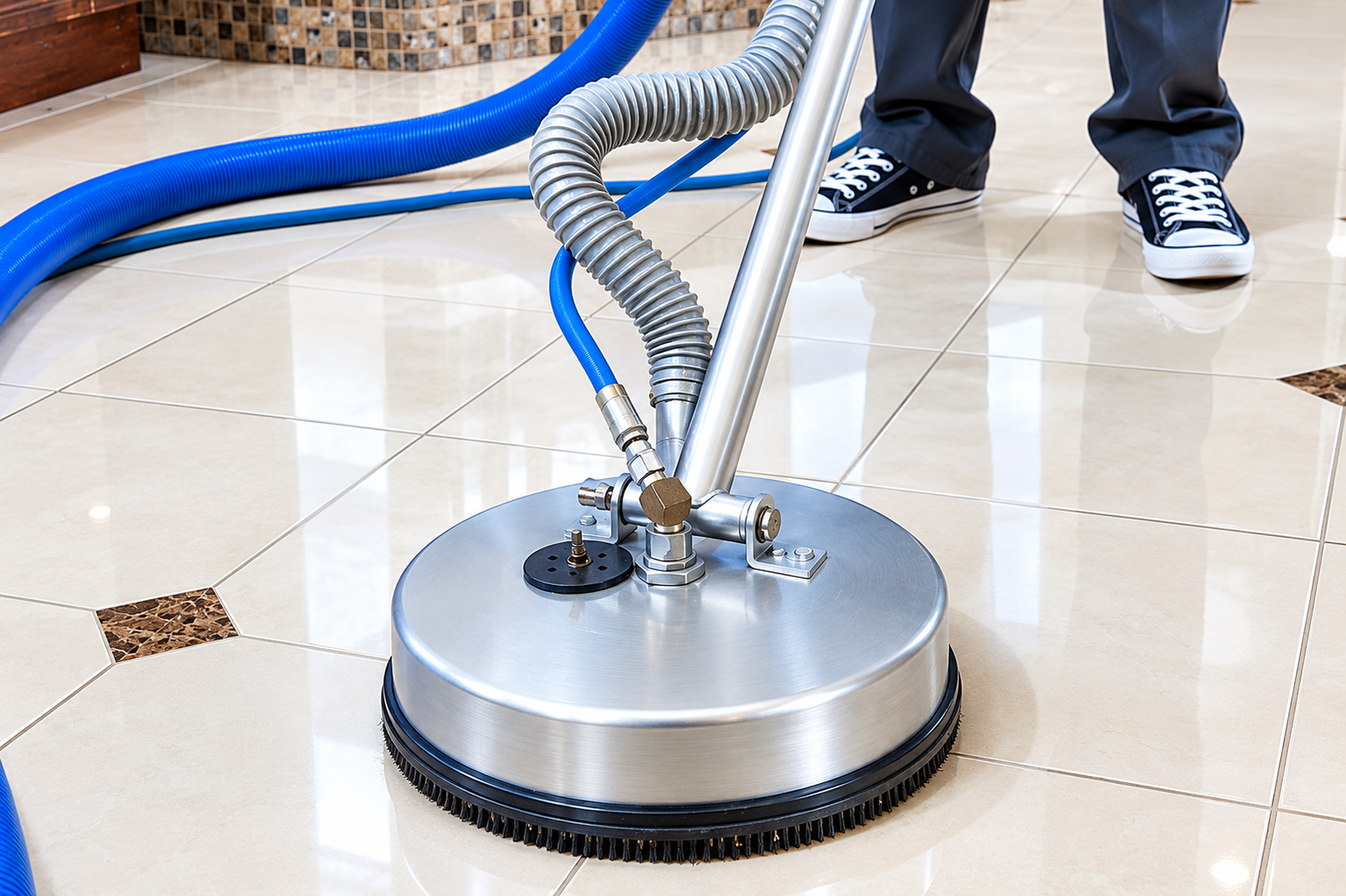
Tile floors and walls can look clean while grout lines slowly collect dirt, soap residue, grease, and moisture. Because grout is porous, ordinary mopping often removes surface dirt without reaching deeper buildup. Over time, discoloured grout can make an otherwise well-maintained room appear neglected.
A professional grout cleaning service can address this problem with specialised equipment and cleaning methods suited to different tile and grout surfaces. Understanding how grout becomes dirty, what professional cleaning involves, and how regular maintenance affects its condition can help property owners make informed cleaning decisions.
Why Grout Gets Dirty Over Time
Grout contains tiny pores that can absorb moisture and hold onto particles. In kitchens, cooking grease and food residue may settle into grout lines. Bathrooms face different challenges, including soap scum, shampoo residue, hard-water deposits, and persistent moisture.
High-traffic areas can accumulate dust and soil that become embedded in grout as people walk across the floor. Even regular sweeping and mopping may not remove everything.
Poor ventilation can make the problem worse. Bathrooms with limited airflow may remain damp for extended periods, creating conditions where mildew can develop on or around grout.
See also: Full-Service Florida Web Design Agency That Helps Businesses Win Online in 2026
Why Ordinary Mopping May Not Be Enough
Mopping is useful for routine floor maintenance, but it is not designed to provide deep grout cleaning. A mop primarily works across the surface of the tile and may have limited contact with recessed grout lines.
Aggressive scrubbing can also create problems. Excessive pressure or unsuitable cleaning products may damage grout, leave residues behind, or affect certain tile finishes.
Professional cleaning methods generally focus on loosening embedded soil before removing it. The appropriate process depends on factors such as grout type, tile material, staining, age, and the condition of the surface.
What Professional Grout Cleaning Involves
A grout cleaning company may begin by inspecting the tile and grout to identify staining, buildup, damaged areas, and areas requiring special treatment.
The cleaning process can include several stages:
- Surface inspection: The technician examines the tile and grout and identifies problem areas.
- Pre-treatment: A suitable cleaning agent is applied to loosen accumulated soil and residue.
- Agitation: Grout lines may be scrubbed with specialised brushes or equipment.
- Deep cleaning: Professional machines can help extract loosened dirt and cleaning solution.
- Spot treatment: Persistent stains may require additional treatment based on their source.
- Final inspection: The cleaned surface is checked for remaining residue or areas needing further attention.
The exact procedure varies according to the material. Natural stone, ceramic tile, porcelain, cement grout, and epoxy grout should not automatically be treated with the same products or techniques.
When Houston Homes May Need Tile and Grout Cleaning
Houston properties can experience conditions that affect tile and grout maintenance. Humidity, frequent rainfall, household activity, and moisture-prone rooms can contribute to residue and discolouration.
Professional tile and grout cleaning in Houston services can be useful for kitchens, bathrooms, entryways, shower surrounds, and other tiled areas where routine cleaning no longer produces the desired results.
Homes with children, pets, or heavy household traffic may also require more frequent deep cleaning. Grout located near entrances can collect outdoor soil, while kitchen grout can develop grease-related buildup.
Tile and Grout Cleaning for Houston, TX Properties
The cleaning requirements of a residential property can vary depending on the room and the type of tile installed. For homeowners searching for tile and grout cleaning in Houston TX, the condition of the grout should be considered alongside the appearance of the tile itself.
A professional assessment can help determine whether cleaning is appropriate or whether damaged grout requires repair or replacement. Cracks, crumbling sections, loose tiles, and persistent moisture problems may need attention before or alongside cleaning.
Deep cleaning can improve the appearance of sound grout, but it cannot correct structural damage.
Signs Your Grout Needs Deep Cleaning
Several visible signs can indicate that routine maintenance is no longer enough.
Dark or Uneven Grout Lines
Grout that was originally light but has gradually become grey, brown, or black may contain accumulated soil or staining.
Persistent Bathroom Residue
White deposits, soap residue, or discolouration around showers and tubs can become difficult to remove through standard household cleaning.
Kitchen Grease Buildup
Grout near cooking areas may absorb grease and food particles. These substances can create stubborn marks that ordinary floor cleaners may leave behind.
Musty Odours
A persistent smell around tiled areas may indicate trapped moisture, organic residue, or another underlying issue. Cleaning may help, but persistent moisture should also be investigated.
Choosing a Tile Grout Cleaning Company
Selecting a tile grout cleaning company requires more than comparing advertised prices. Ask what cleaning methods are used, which tile and grout materials the company handles, and whether technicians inspect the surface before beginning work.
It is also useful to ask about:
- Cleaning products and their intended applications
- Equipment used for grout cleaning
- Treatment of stubborn stains
- Protection of surrounding surfaces
- Drying recommendations
- Grout sealing options
- Experience with natural stone and specialty tiles
A clear explanation of the proposed process can help prevent unsuitable cleaning methods from being used on delicate surfaces.
How Often Should Grout Be Professionally Cleaned?
There is no universal schedule for every property. Cleaning frequency depends on traffic, moisture exposure, tile location, household activity, and the condition of the grout.
A bathroom used by several people each day may require more attention than a lightly used guest room. Kitchen floors may also need frequent cleaning because of food spills and grease.
Routine sweeping, prompt spill removal, appropriate mopping, and adequate bathroom ventilation can reduce buildup between professional cleanings.
Professional Cleaning Versus DIY Methods
DIY cleaning can work for light surface dirt, especially when grout is maintained regularly. However, deeply embedded soil may require stronger equipment and controlled cleaning techniques.
Homeowners should avoid mixing household chemicals. Products containing acids, bleach, or other strong ingredients can be unsuitable for certain tiles and grout. Natural stone is particularly sensitive to some acidic cleaners.
Professional cleaning is generally more appropriate when grout has extensive discolouration, heavy buildup, widespread staining, or difficult-to-reach areas.
Maintaining Clean Grout After Professional Service
Good maintenance can extend the time between deep cleanings. Sweep or vacuum tiled floors regularly to remove loose particles before they settle into grout lines.
Clean spills promptly, especially in kitchens and bathrooms. Use cleaning products recommended for the specific tile and grout material rather than assuming one product is suitable for every surface.
Bathroom ventilation also matters. Running an exhaust fan during and after showers can help reduce lingering moisture.
For suitable grout surfaces, sealing may provide additional resistance against moisture and staining. However, sealing requirements depend on the grout material and should be discussed with a qualified professional.
What to Check Before Booking a Cleaning Service
Before scheduling a tile grout cleaning service, inspect the areas that concern you most and communicate any known problems. Mention previous cleaning treatments, damaged grout, natural stone surfaces, or recurring moisture issues.
Ask for details about the expected cleaning process and whether the quoted service includes stain treatment, extraction, sealing, or other additional work.
A professional cleaning appointment should begin with an understanding of the surface rather than applying the same method to every tiled area. Proper assessment helps protect the tile, grout, and surrounding finishes while addressing the dirt that routine cleaning may leave behind.


 By
By