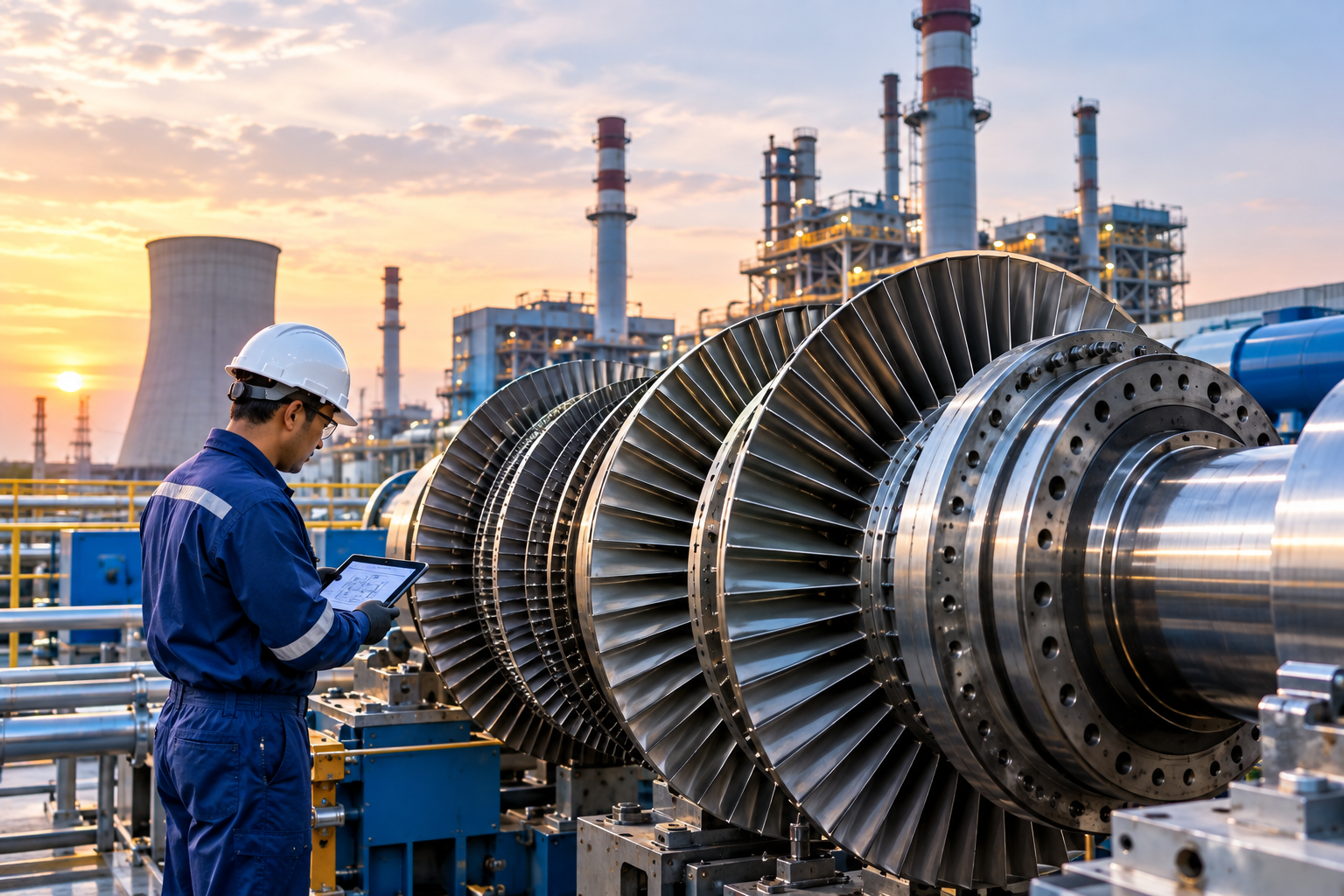
Turbines are among the most heavily used mechanical systems in a power generation facility. They operate under demanding conditions involving high temperatures, pressure, rotational speeds, and continuous mechanical loads. Even a small change in turbine condition can affect efficiency, output, equipment life, and plant availability.
A power plant turbine needs regular inspection and maintenance to keep its major components operating within acceptable limits. Maintenance teams typically monitor vibration, temperature, lubrication, alignment, pressure, and component condition to identify problems before they result in costly failures.
How a Turbine Converts Energy Into Power
A turbine converts the energy contained in steam, gas, or water into rotational mechanical energy. The rotating shaft is connected to a generator, which converts that mechanical energy into electrical power.
The exact design depends on the type of power plant. Steam turbines use high-pressure steam to rotate multiple stages of blades. Gas turbines use hot combustion gases, while hydro turbines use moving water.
Several components work together during operation. These include the rotor, blades, shaft, bearings, casing, seals, and lubrication system. Each component has a specific function, and a problem in one area can affect the performance of the wider system.
Operating conditions also influence component life. Frequent starts and stops, rapid temperature changes, excessive vibration, poor lubrication, and contaminated fluids can increase mechanical stress and accelerate wear.
See also: Flat Roof Dome Skylights: A Practical Guide to Choosing, Installing, and Maintaining Them
Problems That Can Reduce Turbine Performance
Turbine problems do not always appear as sudden failures. Some develop gradually and can be detected through changes in operating data.
Blade erosion is one common concern, particularly in equipment exposed to moisture, particles, or high-velocity flow. Damaged or worn blades can alter airflow and reduce efficiency.
Vibration is another useful indicator of mechanical condition. Excessive vibration may be associated with rotor imbalance, shaft misalignment, bearing deterioration, loose components, or other mechanical issues. Ignoring unusual vibration readings can increase the risk of secondary damage.
Bearings require close attention because they support rotating components and help maintain proper shaft movement. Lubrication problems, contamination, overheating, and wear can affect bearing performance.
Seals can also deteriorate over time. Leakage may reduce efficiency and, depending on the turbine design, create additional operating or safety concerns.
Thermal stress presents another challenge. Repeated heating and cooling cycles can place stress on metal components and contribute to cracking or deformation. Regular inspections help maintenance personnel identify these conditions at an earlier stage.
Inspection Techniques Used During Maintenance
Inspection provides the information needed to determine whether equipment can continue operating safely or requires corrective work.
Visual inspection is often the starting point. Technicians examine accessible components for cracks, corrosion, deposits, leaks, deformation, and other visible abnormalities.
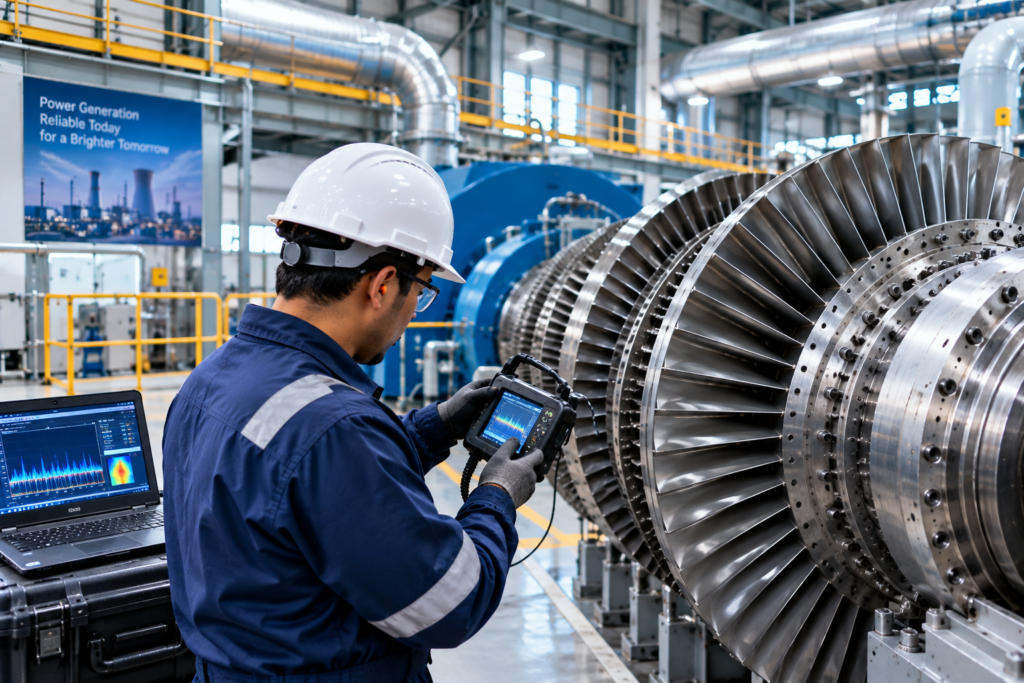
Vibration monitoring provides information about rotating equipment condition. Measurements can be compared over time to identify changes in operating behavior. A gradual increase in vibration may indicate developing mechanical issues that require further investigation.
Non-destructive testing can be used to identify defects without damaging the inspected component. Depending on the equipment and inspection objective, methods may include ultrasonic testing, magnetic particle testing, dye penetrant testing, or other techniques.
Temperature and pressure measurements also provide useful operating information. Unexpected changes can indicate restrictions, cooling problems, seal issues, or changes in equipment performance.
Alignment checks are particularly relevant after major maintenance activities or when vibration and coupling problems are suspected. Correct shaft alignment helps reduce unnecessary mechanical loading on connected components.
Lubrication analysis can reveal contamination, degradation, or wear particles in oil systems. This information can help maintenance personnel identify problems involving bearings and other lubricated components.
How Power Plant Services Support Turbine Reliability
Specialist power plant services can cover a wide range of activities, including inspection, troubleshooting, repairs, commissioning assistance, equipment testing, and scheduled overhauls.
External technical teams may be brought in during planned outages when the plant requires additional personnel with experience in specific turbine systems. They can assist with inspections, component replacement, measurements, testing, and documentation.
The value of these services depends largely on the technical expertise of the personnel involved. Turbine maintenance requires accurate measurements and careful adherence to equipment specifications. Improper assembly, incorrect clearances, or inadequate inspection can create problems after the equipment returns to operation.
Where Consultancy Fits Into Maintenance Planning
A power plant consultancy can provide an independent assessment of equipment condition, maintenance practices, operating data, and reliability concerns.
Consultants may review historical failure records, inspection reports, operating parameters, and maintenance intervals. Their findings can help plant operators determine where additional inspections or corrective work may be appropriate.
Consultancy can also be useful when a plant is planning a major overhaul, evaluating equipment upgrades, investigating recurring failures, or developing a longer-term maintenance schedule.
The recommendations should be based on the specific turbine design, operating history, manufacturer requirements, and actual equipment condition rather than relying solely on generic maintenance intervals.
On-Site Support During Repairs and Outages
Some maintenance activities must be carried out at the plant because moving large turbine components to another facility may be impractical or could extend downtime.
Field service solutions can include on-site inspection, troubleshooting, alignment, machining, repair support, testing, and commissioning assistance. The exact scope depends on the equipment and the capabilities of the service provider.
During an outage, coordination is particularly important. Inspection findings may affect the repair schedule, component replacement decisions, or testing requirements before startup. Experienced technicians can help maintenance teams respond to these findings while keeping work organized.
Safety procedures also need to remain central throughout the work. Isolation, lockout procedures, lifting operations, confined-space requirements, hot-work controls, and equipment-specific safety procedures must be addressed before maintenance begins.
Selecting the Right Technical Service Provider
Experience should be one of the first factors considered when evaluating field service companies. A provider should have technicians who understand the type of turbine and associated equipment used at the facility.
Technical qualifications, inspection capabilities, safety procedures, documentation practices, and availability of specialized tools can all affect the quality of maintenance work.
It is also useful to review previous experience with similar equipment. A provider familiar with the turbine model, generator arrangement, auxiliary systems, and common failure modes may be better prepared to identify unusual conditions during an outage.
Clear reporting is another practical consideration. Inspection results should document measurements, observed defects, recommended actions, and relevant supporting information so that plant personnel can make informed maintenance decisions.
Building a Practical Maintenance Program
Good plant maintenance services typically combine preventive, predictive, and corrective activities rather than relying on one maintenance method.
Preventive maintenance involves scheduled activities such as lubrication, inspections, cleaning, component checks, and planned replacement. Predictive maintenance uses operating information to identify changes in equipment condition. Corrective maintenance addresses defects that have already been identified.
A maintenance schedule should consider operating hours, startup and shutdown frequency, equipment age, environmental conditions, manufacturer recommendations, and previous inspection results.
Routine monitoring can provide an early indication of deterioration. Maintenance teams can establish baseline readings for vibration, temperature, pressure, and other operating parameters and then compare future measurements against those baselines.
Detailed records also matter. Inspection reports, replaced components, measured clearances, vibration readings, oil analysis results, and repair histories provide useful information for future maintenance decisions.
Planning for Long-Term Equipment Reliability
Effective power plant maintenance is not limited to repairing equipment after a failure. It involves understanding how the turbine behaves during normal operation and identifying changes that could indicate deterioration.
A practical maintenance cycle may include routine operating checks, periodic inspections, condition monitoring, scheduled outages, and major overhauls at appropriate intervals. The frequency of each activity should reflect the equipment’s design and actual operating conditions.
Major inspections can provide an opportunity to examine internal components that cannot be assessed during normal operation. Findings from these inspections can then influence future maintenance intervals and component replacement plans.
For older equipment, maintenance planning may also involve assessing component availability, repair options, and the condition of supporting systems. This can help plant operators prepare for potential maintenance requirements instead of responding only after a failure occurs.
A well-maintained power plant turbine can support stable generation by reducing avoidable mechanical problems and helping operators identify deterioration before it develops into a major outage. Regular condition monitoring, competent inspection, accurate maintenance records, and properly planned repair work all contribute to reliable turbine operation.


 By
By